

The breathtaking diversity of marine life covers over 70% of our planet, yet so much of it remains a mystery.
This guide is your deep dive into the world beneath the waves, created to answer your biggest questions about the ocean’s inhabitants, their ecosystems, and how we can protect them.
Key Takeaways
- Essential for All Life: The ocean is a critical life support system, producing the majority of Earth’s oxygen and regulating the global climate.
- Incredible Biodiversity: Marine life is incredibly diverse, with unique ecosystems ranging from vibrant coral reefs to the extreme deep sea, and features remarkable adaptations like bioluminescence.
- Human Impact is the Main Threat: The greatest dangers to marine ecosystems stem from human activities, primarily plastic pollution, climate change, and overfishing.
- Conservation Requires Action: Protecting our oceans is a shared responsibility, and individual actions like reducing plastic use and making sustainable choices can create a significant positive impact.
- Key Takeaways
- What Is Marine Biology?
- Why Marine Life is Crucial for Our Planet
- From Ocean Life to Human Innovation
- Explore Marine Life Ecosystems
- Coral Reefs
- The Deep Sea
- Kelp Forests
- The Technology That Unlocks the Ocean’s Secrets
- An Encyclopedia of Marine Life
- Marine Mammals
- Ocean Fish
- Marine Reptiles
- Incredible Adaptations in Marine Life
- Threats to Our Oceans
- How You Can Help Protect Marine Life
- Careers in Marine Biology
- Frequently Asked Questions (FAQs)
- Conclusion
What Is Marine Biology?
First things first, what are we talking about when we discuss marine biology? In short, it is the scientific study of the organisms that live in the ocean and other saltwater environments.
Marine biologists examine everything from the tiniest plankton to the colossal blue whale, seeking to understand their behaviors, physiology, and how they interact with their environment.
Why Marine Life is Crucial for Our Planet
Beyond pure fascination, the study of marine biology is essential for our survival. The ocean is not just a body of water; it is a critical component of Earth’s life support system.
- Oxygen Production: It may surprise you to learn that phytoplankton—microscopic marine algae—produce an estimated 50-80% of the world’s oxygen. Every other breath you take comes from the ocean.
- Climate Regulation: The ocean acts as a massive carbon sink, absorbing vast amounts of carbon dioxide from the atmosphere and helping to regulate global temperatures.
- Economic Resources: Fisheries provide food for billions of people and support millions of jobs worldwide. Additionally, many unique compounds used in modern medicine are discovered in marine organisms. For more details on the ocean’s role, see NASA’s Ocean science page.
From Ocean Life to Human Innovation
The secrets of marine life are also helping to drive human innovation in incredible ways.
- Biomedicine: The blood of the horseshoe crab contains a unique clotting agent that is essential for testing the sterility of medical equipment and vaccines. Furthermore, powerful painkillers have been developed from the venom of cone snails.
- Biomimicry: The unique, drag-reducing texture of shark skin has inspired the design of everything from competitive swimsuits to more efficient coatings for ships and aircraft.
Explore Marine Life Ecosystems
The ocean isn’t one single environment; instead, it is a collection of vastly different ecosystems, each with its own unique inhabitants and characteristics. Let’s explore some of the most vital ones.
Coral Reefs
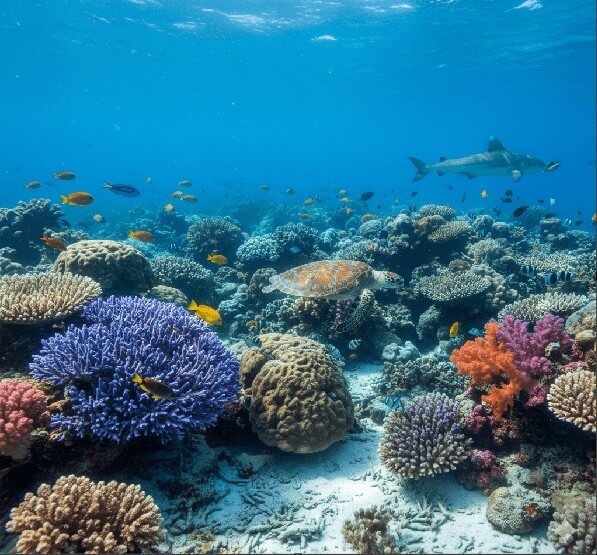
Often called the “rainforests of the sea“, coral reefs are vibrant underwater structures built by tiny animals called coral polyps. Despite covering less than 1% of the ocean floor, they support an astonishing 25% of all marine species.
The Deep Sea
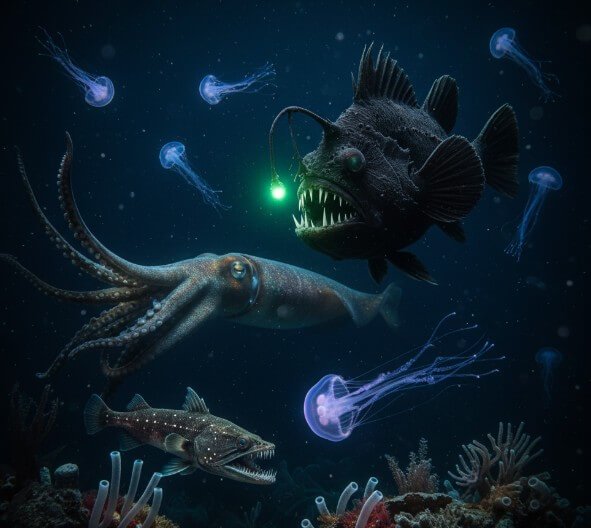
Imagine a world of crushing pressure, freezing temperatures, and complete darkness. This is the deep sea, the largest habitat on Earth. Here, remarkable creatures have evolved to survive in extreme conditions, often through bioluminescence—the ability to create their own light.
Kelp Forests
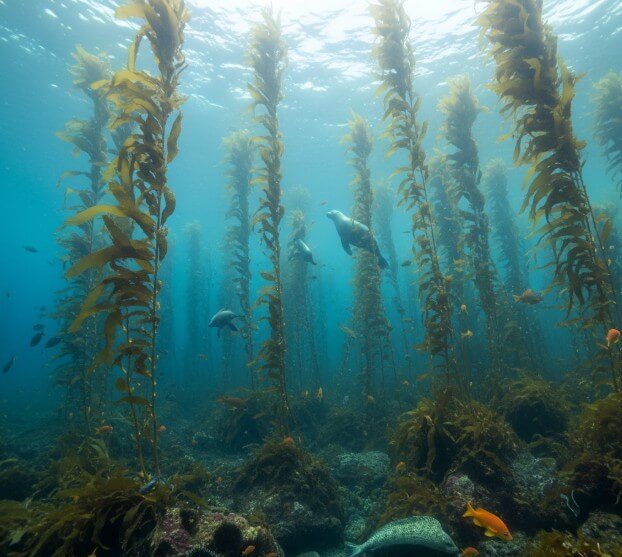
Found in cool, nutrient-rich waters, kelp forests are towering underwater ecosystems that provide food and shelter for thousands of species, from sea otters to rockfish. These towering brown algae can grow up to two feet a day, creating a dynamic three-dimensional habitat.
The Technology That Unlocks the Ocean’s Secrets
How do scientists study a world so vast and often inaccessible? Modern marine biology relies on incredible technology to explore the ocean’s depths.
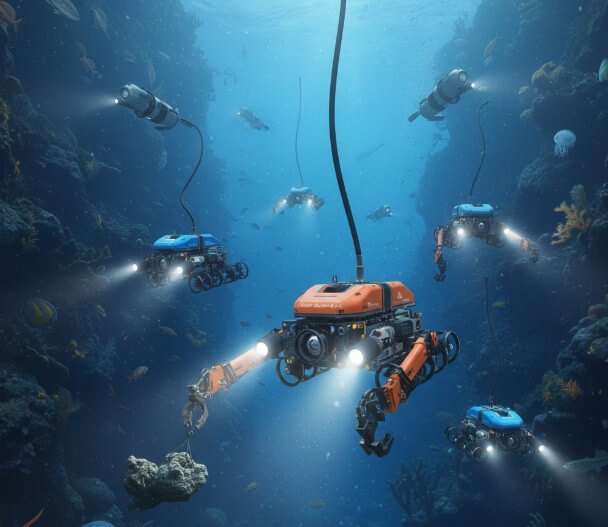
- Remotely Operated Vehicles (ROVs): These unmanned underwater robots, equipped with cameras and robotic arms, allow scientists to explore deep-sea environments from the safety of a ship, sending back stunning high-definition video of places no human has ever been.
- Satellite Tagging: By attaching small satellite transmitters to animals like sharks, whales, and sea turtles, researchers can track their epic migrations across entire oceans, revealing crucial information about their behavior and habitats.
- Environmental DNA (eDNA): Scientists can now learn which species are present in an area simply by analyzing the DNA they shed in the water. This revolutionary, non-invasive technique helps us understand biodiversity without ever seeing or disturbing the animals.
An Encyclopedia of Marine Life
So, who exactly lives in these incredible ecosystems? The sheer variety is staggering. Consequently, scientists often group animals to better study them.
Marine Mammals
These are the warm-blooded, air-breathing animals of the ocean. Many people wonder how they can live in the water, and the answer lies in brilliant adaptations like blubber for insulation and the ability to hold their breath for extended periods.
- Whales: From the filter-feeding humpback to the predatory orca.
- Dolphins: Known for their intelligence and complex social structures.
- Seals and Sea Lions: These pinnipeds are perfectly adapted for a life both on land and in the water.
Ocean Fish
The most diverse group of vertebrates on the planet, fish are found in every marine habitat. Their adaptations are endless, from the powerful swimming of a tuna to the expert camouflage of a flounder.
- Sharks: Ancient predators vital to ocean health.
- Clownfish: Famously living in symbiosis with sea anemones.
- Manta Rays: Gentle giants that glide through the water, filtering plankton.
Marine Reptiles
Having evolved from land-based ancestors, these reptiles have returned to the ocean.
- Sea Turtles: Ancient mariners that migrate thousands of miles.
- Sea Snakes: Highly venomous snakes fully adapted to aquatic life.
Incredible Adaptations in Marine Life
Survival in the ocean requires extraordinary biological tools. Over millions of years, marine animals have developed some of the most amazing adaptations on the planet.
- Bioluminescence: In the dark of the deep sea, animals like the anglerfish produce their own light to attract prey or find mates.
- Echolocation: Dolphins and whales use a form of biological sonar, emitting sound waves and interpreting the echoes to navigate and hunt in murky waters.
- Extreme Pressure Resistance: Deep-sea creatures like the Mariana snailfish have flexible bones and specialized proteins that allow them to withstand pressures that would crush a submarine.
Threats to Our Oceans
Unfortunately, this vibrant underwater world is in peril. Human activities pose a significant threat to the delicate balance of marine ecosystems.
- Plastic Pollution: Millions of tons of plastic enter the ocean each year, harming animals that mistake it for food or become entangled in it.
- Climate Change: Rising sea temperatures cause coral bleaching, a devastating event where corals expel their symbiotic algae and turn white. For more information on this, see the latest reports from NOAA’s Coral Reef Watch.
- Overfishing: When we catch fish faster than they can reproduce, we disrupt the entire food web and threaten both the species and the human communities that depend on them.
How You Can Help Protect Marine Life
The challenge is significant, but everyone can play a part in the solution.
- Reduce Plastic Consumption: Opt for reusable bags, water bottles, and containers to minimize your plastic footprint.
- Choose Sustainable Seafood: Use resources like the Monterey Bay Aquarium’s Seafood Watch guide to make ocean-friendly choices when you shop or dine.
- Support Conservation Organizations: Donate to or volunteer with reputable organizations dedicated to ocean conservation.
- Educate Yourself and Others: Share what you’ve learned about the importance of our oceans and the threats they face.
Careers in Marine Biology
Are you fascinated by the ocean and want to turn that passion into a career? A path in marine biology can be incredibly rewarding.
Marine biologists don’t just work in labs; their jobs can involve deep-sea exploration, satellite tagging of sharks, creating marine protected areas, and educating the public.
This career typically requires a bachelor’s degree in biology or a related field, with many roles requiring a master’s or Ph.D. for advanced research.
Frequently Asked Questions (FAQs)
A: The largest animal is the blue whale, which is not only the largest animal in the ocean but the largest animal known to have ever existed on Earth.
A: Most fish use gills to extract oxygen from the water. Marine mammals, like dolphins and whales, have lungs and must surface to breathe air, just like humans.
A: Generally, a marine biologist studies the organisms in the ocean (the life), while an oceanographer studies the ocean itself—its physical properties like currents, tides, and chemical composition.
Conclusion
From the sunlit coral reefs to the mysterious deep sea, the world’s oceans are home to an incredible spectrum of marine life. Understanding these ecosystems and the creatures within them is the first step toward effective conservation. We encourage you to share this guide to raise awareness and leave a comment below with your favorite ocean animal!

Love to read, explore and write about Science, Mathematics and Technology.
The name “Newton” coming from how I love Science.