
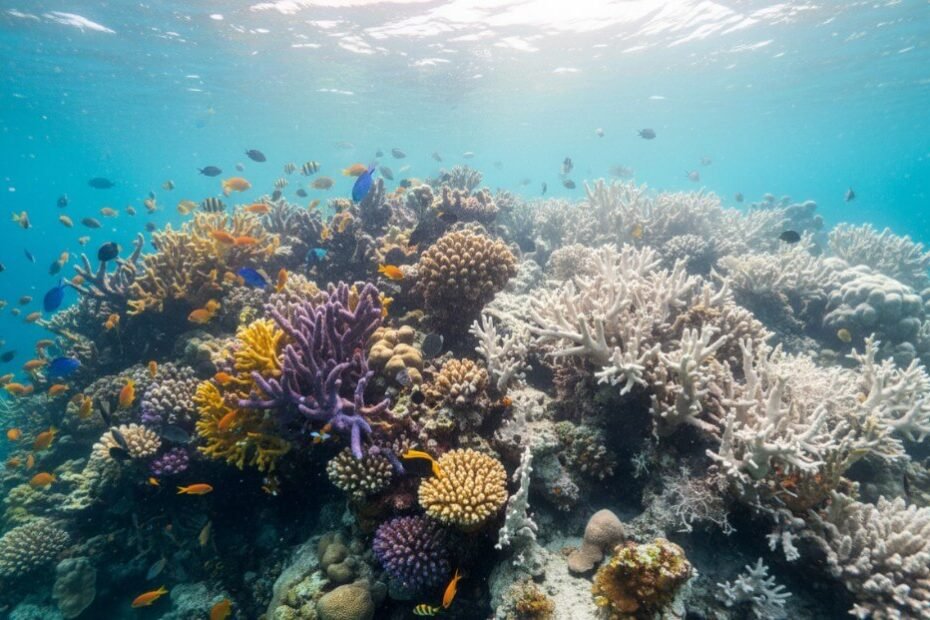
Coral bleaching is one of the most critical visual indicators of our planet’s climate crisis, yet what is really happening beneath the waves?
This guide explains the science behind this devastating phenomenon, its far-reaching consequences, and the urgent actions we can take to stop it.
Key Takeaways
- It’s a Stress Response: Coral bleaching occurs when corals, stressed by changes in conditions like temperature, expel the symbiotic algae (zooxanthellae) living in their tissues, causing them to turn completely white.
- Main Cause is Climate Change: The primary driver is a significant rise in sea surface temperatures caused by global warming.
- It’s Not Always Fatal (But Often Is): While bleached coral is not dead, it is under severe stress and is more susceptible to mortality. Recovery is possible but requires a return to normal ocean conditions.
- Global Impact: This phenomenon threatens entire marine ecosystems, the economies that depend on them, and the protection of our coastlines.
- Key Takeaways
- How Does Coral Bleaching Work? The Science Explained
- What Are the Main Causes of Coral Bleaching?
- A Timeline of Major Global Bleaching Events
- What Are the Consequences of Coral Bleaching?
- Can Corals Recover from Bleaching? The Science of Resilience
- How Can We Stop Coral Bleaching? Solutions and Actions
- Frequently Asked Questions (FAQ)
How Does Coral Bleaching Work? The Science Explained
To understand what happens when coral bleaches, you first need to know how it lives. Corals are not plants; they are animals that have a vital partnership—a symbiotic relationship—with microscopic algae called zooxanthellae.
The Symbiotic Relationship: Corals and Zooxanthellae
These algae live directly inside the coral’s tissues. In this partnership, the coral provides the algae with a protected environment and the compounds they need for photosynthesis.
In return, the algae produce oxygen and supply the coral with the vast majority of its energy and nutrients. Critically, these algae are also what give corals their brilliant, beautiful colors.
The Tipping Point: What Happens During a Bleaching Event
A vibrant coral colony, teeming with symbiotic algae (zooxanthellae) that provide most of its color and energy.
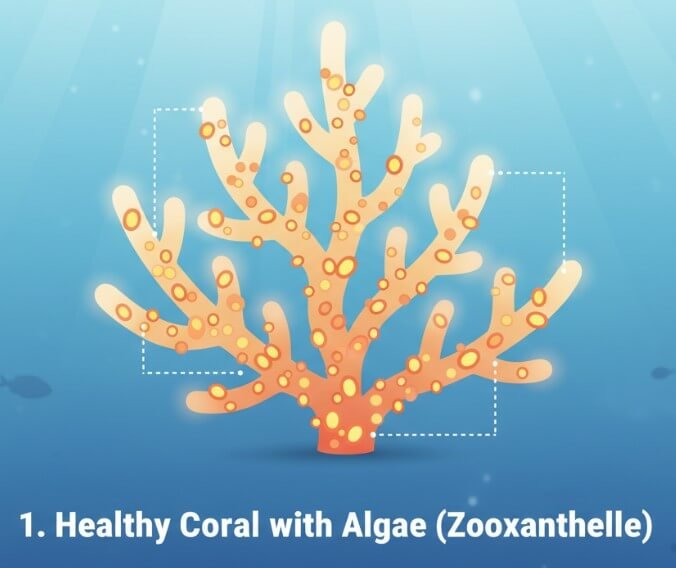
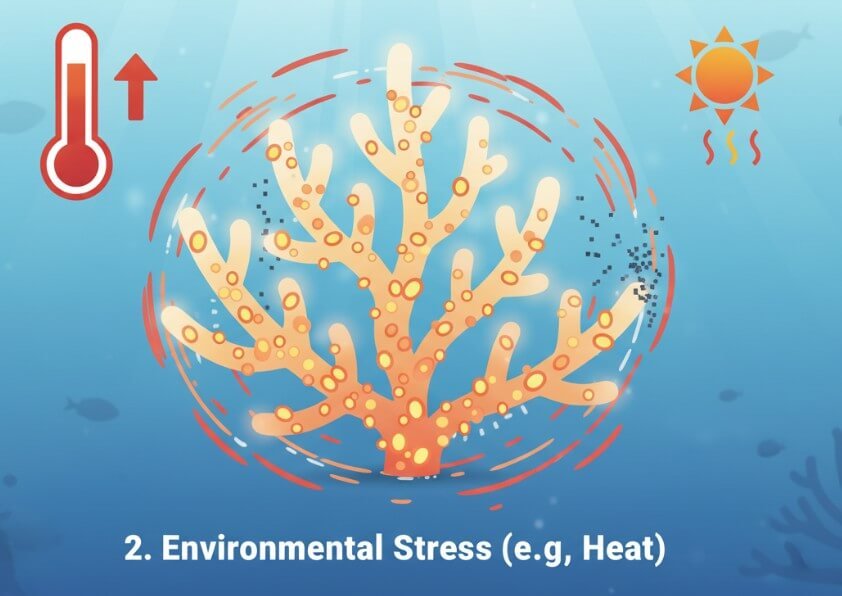
When the ocean environment becomes too stressful, primarily due to heat, this symbiotic relationship breaks down. The zooxanthellae begin to produce reactive oxygen species that are harmful to the coral.
Consequently, the coral animal expels the algae from its tissues to protect itself.
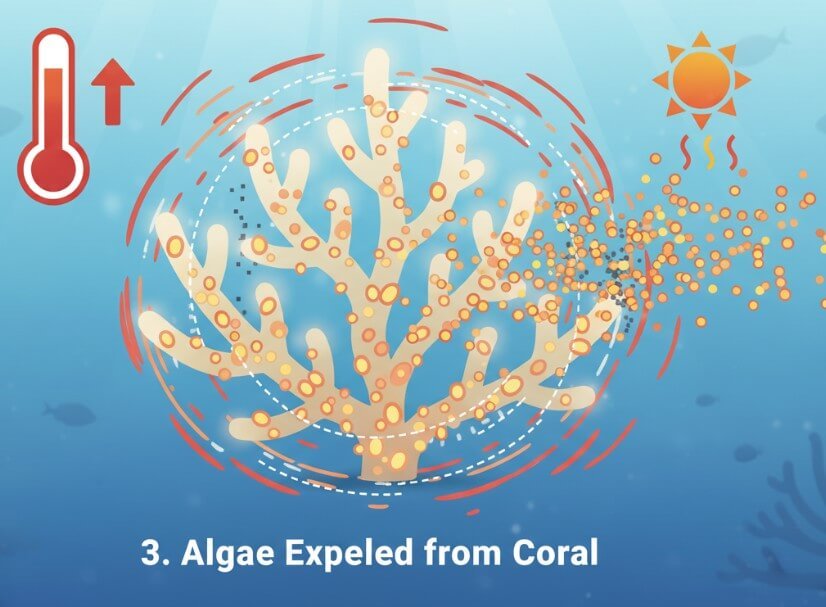
Without the algae, the coral’s bright white calcium carbonate skeleton becomes visible through its transparent tissues. This is the phenomenon we call coral bleaching.
The Phenomenon of Colorful Bleaching
Interestingly, not all corals turn stark white. Some undergo a spectacular transformation, producing brilliant neon pigments in pink, blue, and yellow.
Scientists believe this “colorful bleaching” is a desperate protective measure.
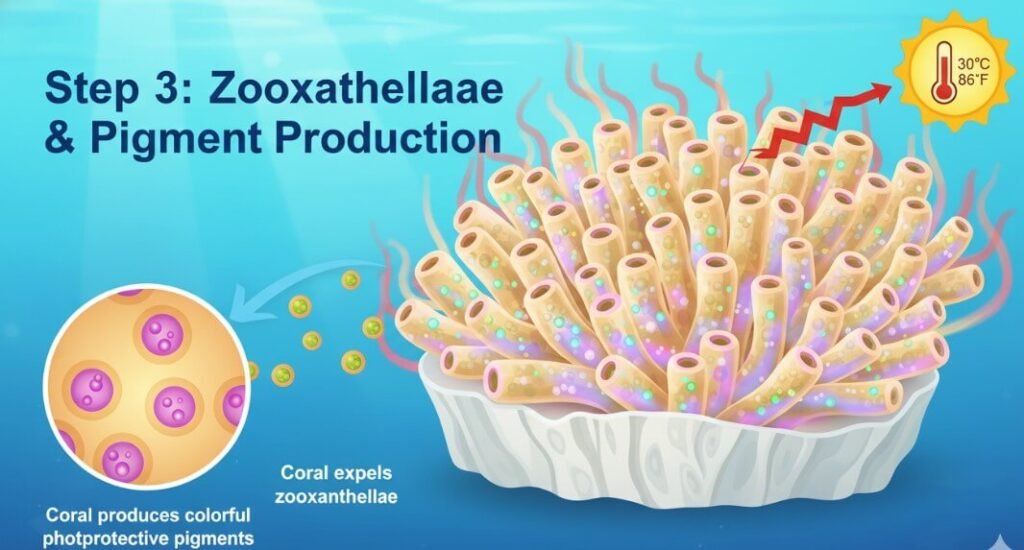
The vibrant colors are created by a layer of photoprotective proteins that act as a sunscreen, shielding the coral from harmful solar radiation in a last-ditch effort to survive and encourage the zooxanthellae to return. It is a beautiful, but tragic, cry for help.
What Are the Main Causes of Coral Bleaching?
While several environmental stressors can cause corals to bleach, one stands far above the rest as the primary driver of the mass bleaching events we see today.
Primary Cause: Rising Ocean Temperatures & Climate Change
The overwhelming scientific consensus points to rising sea surface temperatures as the main culprit. The world’s oceans have absorbed over 90% of the excess heat from greenhouse gas emissions, and even a temporary temperature increase of just 1-2°C (2-4°F) can trigger a bleaching event.
How Scientists Predict Mass Bleaching Events
Scientists are no longer just reacting to bleaching; they are actively predicting it. Using satellites, agencies like NOAA’s Coral Reef Watch monitor sea surface temperatures globally in real-time.
They use a metric called Degree Heating Weeks (DHWs), which measures accumulated heat stress over a 12-week period.
When the DHW value exceeds certain thresholds, scientists can issue warnings that a mass bleaching event is imminent, giving marine park managers crucial time to prepare and respond.
Other Stressors
In addition to heat, other factors can cause corals to bleach, often on a more localized level:
- Extreme Low Tides and Sunlight: Overexposure to solar radiation can cause stress.
- Pollution: Runoff from agriculture and urban development can degrade water quality.
- Ocean Acidification: While a separate issue, it adds stress to corals by making it harder for them to build their skeletons, reducing their resilience.
A Timeline of Major Global Bleaching Events
While localized bleaching has always occurred, the scale and frequency of mass bleaching events driven by global warming have accelerated dramatically in recent decades.
- 1998: The first truly global mass bleaching event, triggered by a strong El Niño, affected 16% of the world’s reefs.
- 2010: A second major global event caused significant bleaching in the Caribbean and Southeast Asia.
- 2014-2017: The longest, most severe, and most widespread bleaching event on record. This multi-year event, detailed by the Great Barrier Reef Marine Park Authority, impacted over 70% of the world’s coral reefs.
What Are the Consequences of Coral Bleaching?
The loss of the world’s coral reefs is not just an ecological tragedy; it is a direct threat to the health and stability of both marine and human systems.
Impact on Marine Ecosystems and Biodiversity
Coral reefs are often called the “rainforests of the sea.” Although they cover less than 1% of the ocean floor, they support about 25% of all marine life. When reefs die, entire ecosystems can collapse.
The Staggering Economic and Social Cost
The value of healthy coral reefs is immense. They provide an estimated $375 billion annually in goods and services and support over 500 million people worldwide through tourism, fishing, and recreation.
A Hidden Cost: The Loss of Future Medicines
Beyond tourism and fishing lies a critical, hidden value: medicine. The incredible biodiversity of coral reefs makes them a natural pharmacy.
Compounds from reef organisms like sponges and sea slugs have already led to breakthrough treatments for cancer, arthritis, and viruses.
When a reef dies, we don’t just lose fish and coral; we lose a potential source of the next life-saving drug.
Impact on Coastal Protection
Healthy reefs act as natural barriers, absorbing up to 97% of a wave’s energy and protecting coastal communities from storms and erosion.
(Suggested media: An embedded short video from a reputable source like PBS or National Geographic explaining the bleaching process visually.)
Can Corals Recover from Bleaching? The Science of Resilience
Yes, corals can recover, but it’s a race against time. Recovery depends on whether the heat stress subsides quickly enough for them to regain their algae.
Scientists are also studying coral resilience, as some corals are naturally more resistant to heat. Understanding and harnessing this natural resilience is a key area of modern marine biology.
How Can We Stop Coral Bleaching? Solutions and Actions
Addressing this crisis requires a combination of high-level policy changes, local conservation, and individual action.
Global Action: Reducing Greenhouse Gas Emissions
The only long-term solution is to aggressively address climate change. This involves transitioning to renewable energy and adhering to international climate agreements.
Innovative Coral Restoration Techniques
Scientists are developing groundbreaking methods to restore damaged reefs, including:
- Microfragmentation: A process where corals are cut into tiny fragments, which then grow back hundreds of times faster than they would in the wild.
- Larval Propagation: Raising coral spawn in labs before releasing them onto degraded reefs to boost recovery.
Local Conservation Efforts
At a local level, we can improve resilience by reducing secondary stressors like pollution, overfishing, and by creating Marine Protected Areas (MPAs).
What You Can Do: Actionable Steps for Individuals
- Reduce Your Carbon Footprint: Make conscious choices about energy, transport, and diet.
- Choose Sustainable Tourism: Never touch coral and use reef-safe sunscreen.
- Spread the Word: Educate your friends and family.
Frequently Asked Questions (FAQ)
No. Bleaching is a stress response where the coral is still alive. However, if the stressful conditions persist, the bleached coral is much more likely to die.
Mass bleaching is a global phenomenon, but some of the most severe events have occurred on Australia’s Great Barrier Reef, in the Caribbean, and across island nations in the Pacific.
Yes, restoration is an active and promising field. However, as organizations like The Nature Conservancy note, restoration is not a substitute for addressing climate change.
Conclusion: A Pivotal Moment for Our Oceans
The widespread prevalence of coral bleaching serves as an undeniable and urgent warning from our planet. These vibrant ecosystems, critical to both marine and human life, are at a tipping point. While the challenge is immense, it is not insurmountable.
By combining decisive global action on climate change with dedicated local conservation and conscious individual choices, we can give these vital underwater cities a fighting chance to recover, adapt, and thrive for generations to come.
What are your thoughts on this issue? Share this article to raise awareness, and let us know in the comments what actions you are taking to protect our oceans.

Love to read, explore and write about Science, Mathematics and Technology.
The name “Newton” coming from how I love Science.